Filament Starter Kit Guide
Start with PLA — the most forgiving material for tuning your printer. Add PETG once you want functional, more heat/impact-resistant parts, and TPU only after you have a direct-drive extruder. The one accessory every starter kit should include is a dry box or desiccant setup — it protects every hygroscopic material you'll eventually buy, not just your first spool.
The one thing to know: PETG, nylon, TPU, and PC are hygroscopic — they pull moisture from the air even in a closed box over weeks — and printing wet filament causes stringing, popping/crackling, and pitted or brittle layers, not a health hazard, a print-quality one.
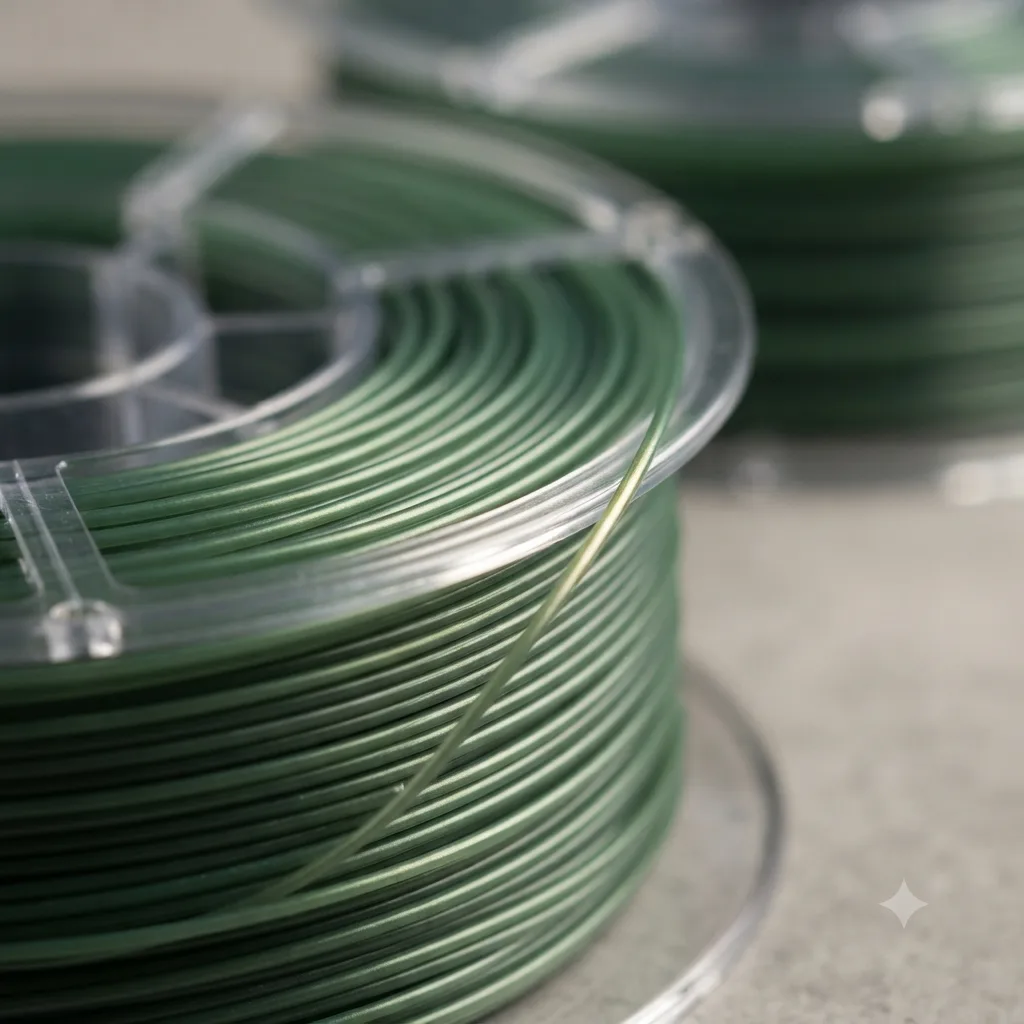
Our picks — by material class
Research-based picks (how we evaluate), from manufacturer TDS sheets. Live Amazon search links, no prices or ratings, an honest drawback on each.
Generic/major brand (e.g. Overture, SUNLU, eSun) PLA 1.75mm 1kg Spool
Nozzle ~190–220°C, bed ~50–60°C, no enclosure needed, low warping, least hygroscopic of common materials but still benefits from dry storage
The correct default first spool — most forgiving of the common materials for temperature tuning, warping, and adhesion.
Best for: Every first print and most decorative/low-stress functional parts
Watch out: PLA gets soft/deforms well below boiling water temperature and is the most brittle of the common materials under impact — not the right choice for outdoor or high-heat parts.
Check price on AmazonNot deciding today? Add it to your cart over there — Amazon keeps it saved (and flags any price change) until you're ready.
Generic/major brand (e.g. Overture, SUNLU, eSun) PETG 1.75mm 1kg Spool
Nozzle ~230–250°C, bed ~70–85°C, no enclosure required (mild warping), noticeably hygroscopic — dry before printing if it's been open more than a few weeks
The step up from PLA for outdoor/functional parts — more layer adhesion strength and heat resistance, still printable on an un-upgraded budget printer.
Best for: Functional parts, outdoor brackets, anything that sees moderate heat or impact
Watch out: PETG strings and oozes more than PLA if temps/retraction aren't tuned, and it will absorb enough moisture from humid air over weeks to cause visible stringing and popping — see our drying explainer.
Check price on AmazonNot deciding today? Add it to your cart over there — Amazon keeps it saved (and flags any price change) until you're ready.
Generic/major brand (e.g. SUNLU, Polymaker, Overture) TPU 1.75mm (95A) 1kg Spool
Nozzle ~220–235°C, bed ~40–60°C, direct-drive strongly recommended, slow print speeds (~20–40mm/s typical), moderately hygroscopic
The flexible/rubber-like material class — phone cases, gaskets, wearable parts — a genuinely different material behavior than any rigid filament.
Best for: Flexible functional parts once you have a direct-drive extruder
Watch out: TPU on a Bowden-tube printer is a common source of frustration (buckling in the tube) — it prints far more reliably on direct drive, and slow speeds mean prints take noticeably longer than PLA/PETG at the same size.
Check price on AmazonNot deciding today? Add it to your cart over there — Amazon keeps it saved (and flags any price change) until you're ready.
Generic/major brand (e.g. eSun PLA+, SUNLU PLA+) PLA+/PLA-Plus 1.75mm 1kg Spool
Nozzle ~200–225°C (varies more brand-to-brand than base PLA), bed ~50–65°C, no enclosure needed, improved impact resistance over standard PLA
Closer to PLA's ease of printing with meaningfully better impact resistance and less brittleness — a good default upgrade once you've dialed in stock PLA.
Best for: Parts that need PLA's ease of use but shouldn't shatter on a drop
Watch out: "PLA+" is not a standardized formulation — temperature ranges vary more between brands than plain PLA does, so always check that specific spool's TDS rather than reusing your old PLA profile unchanged.
Check price on AmazonNot deciding today? Add it to your cart over there — Amazon keeps it saved (and flags any price change) until you're ready.
Generic/major brand (e.g. SUNLU, Creality) Digital Filament Dryer Box (Active)
Active heating ~35–55°C range, digital timer/temperature display, holds 1–2 standard 1kg spools
The single most cost-effective addition to a starter kit — protects every hygroscopic material (PETG, TPU, nylon, PC) you'll eventually buy, not just your first spool.
Best for: Anyone planning to print more than PLA, or storing filament in a humid climate/season
Watch out: A dryer removes existing moisture but doesn't seal out humidity between uses unless you also store the spool in a sealed bag/box with desiccant afterward — drying once doesn't protect a spool left open indefinitely.
Check price on AmazonNot deciding today? Add it to your cart over there — Amazon keeps it saved (and flags any price change) until you're ready.
Generic Silica Gel Desiccant Packs (Rechargeable/Indicating)
Color-indicating (orange-to-green) silica gel, oven- or dryer-box rechargeable, sold in multi-pack bulk
The cheapest ongoing defense against moisture re-absorption — drop packs in every sealed spool bag or storage bin.
Best for: Long-term storage of any spool between print sessions, especially PETG/nylon/TPU
Watch out: Desiccant only works in a genuinely sealed container (a bag with the air pressed out, or a gasketed bin) — leaving packs in an open bin with a loose lid does very little.
Check price on AmazonNot deciding today? Add it to your cart over there — Amazon keeps it saved (and flags any price change) until you're ready.
Frequently Asked Questions
PLA, 1kg spool, from any of the major brands. It has the widest temperature tolerance and lowest warping, making it the most forgiving material while you're still tuning your printer's settings.
Not on day one if you're only printing PLA, but the moment you buy PETG, TPU, or nylon, a dry box becomes genuinely useful — those materials absorb enough moisture from normal room air within weeks to affect print quality.
It's a reasonable upgrade once you've got PLA dialed in — better impact resistance for a small cost, though formulation (and thus temperature) varies more between brands than standard PLA does.